
Safety at ACE
At ACE, safety is not a checklist, it is the foundation of everything we do. This is especially critical when delivering immunotherapy to children, where careful monitoring, expert clinical judgement and immediate access to advanced care are essential.
Our new centre has been purposefully designed to provide the highest level of clinical safety, combining specialist expertise with hospital-grade facilities, all under one roof.
High Dependency Unit (HDU)
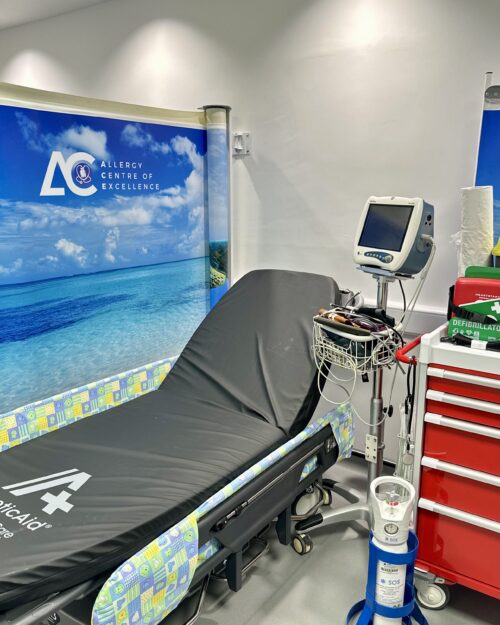
We have a fully equipped High Dependency Unit (HDU) onsite, providing an additional layer of reassurance should a child require closer observation or support during treatment.
The HDU is fitted with advanced monitoring equipment to continuously track vital signs, including heart rate, oxygen levels and blood pressure. It is stocked with emergency medications, oxygen delivery systems and resuscitation equipment, allowing our clinical team to respond immediately and effectively if a child becomes unwell.
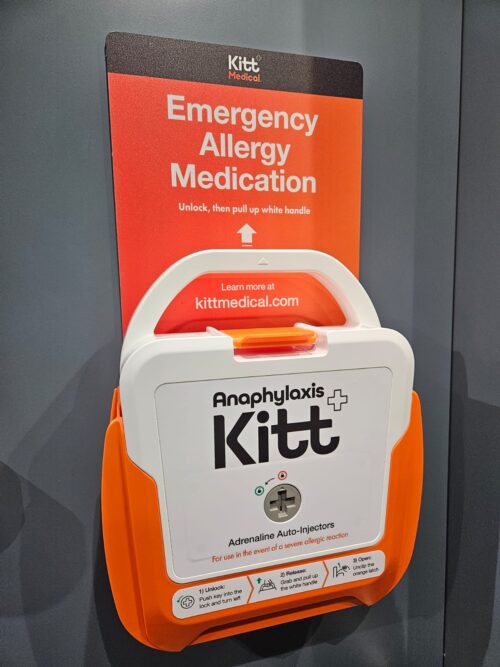
For added safety and rapid response, we also have a KITT Medical emergency system located within our lift. KITT is a specialist emergency response solution that ensures all essential life-saving equipment and medications are clearly organised, fully stocked and immediately accessible in the event of an emergency, reducing response time and supporting swift clinical action.
Children in the HDU are cared for by highly trained clinicians with extensive experience in paediatric allergy and immunotherapy, ensuring swift, calm and expert care at all times.
Onsite Paediatric Intensive Care Expertise
In addition, we have direct access to a dedicated Paediatric Intensive Care Unit (PICU) team from King’s College Hospital, London. This specialist PICU team is experienced in managing urgent and complex paediatric situations and is immediately available should escalation of care be required.
Their presence means that advanced paediatric intensive care expertise is available without delay, offering parents the highest possible level of reassurance and clinical safety.
Designed for Peace of Mind
Every aspect of our new centre has been thoughtfully planned to prioritise safety, from clinical protocols and staff training to equipment, layout and emergency preparedness. By combining specialist allergy care with hospital-level support, we are able to deliver immunotherapy in an environment where children are closely monitored, expertly treated and fully protected.
At ACE, your child’s safety is always our highest priority.
Our Process
Referral
Please advise your Allergist that you would like to move forward with food desensitisation and they will complete and send the necessary referral form and most recent medical report to our Admin Team.
Assessment
When one of our Paediatric Allergists has determined your child is suitable for oral immunotherapy, they will complete and send a referral form to our Admin Team. A ‘virtual’ assessment appointment will then be arranged with a member of the Clinical Team who will be looking after your child on the programme. They will discuss the process and ensure that you fully understand what is involved. The assessment will cover the detailed history provided by your allergist, focussing on the particular allergen selected for desensitisation. This is your opportunity to have answered any additional questions you may have.
Consent
If it is felt your child is suitable for the treatment, you will be provided with written information and given plenty of opportunity to ask any questions. When you feel ready, you will be asked to sign a consent form to indicate that you have fully understood the risks involved. Older children will be asked to sign an assent form confirming they are motivated and willing to undergo therapy. If you do not already have them, you will be prescribed adrenaline autoinjectors e.g. Epipen and trained in their use, so that you are well prepared to deal with a more severe allergic reaction.
Initial Dose
Up-Dosing
Maintenance
Follow-Up
Referral
This pathway is for families considering Oral Immunotherapy (OIT) for their child (up to 17 years of age) who:
- Have not been assessed privately by one of our Consultant Paediatric Allergists (Professors Fox, Du Toit or Lack)
- Do have a confirmed allergy diagnosis from their NHS (or other recognised) allergy service
This pathway allows you to understand whether OIT may be suitable for your child before committing to a full treatment programme, at a lower initial cost.
First – register your interest Self-Referral OIT Diagnostic Gateway and a member of our team will reach out to you. You will need to email us:
- Your child’s most recent clinic letters(s)
- Relevant test results confirming an allergy diagnosis
- Documentation from your NHS or other allergy team
We will then pass this information to a member of our clinical team who will review the information, assess suitability and if confirmed suitable for an assessment, we can then schedule this appointment for you.
Please note that up to date skin prick tests, blood tests or spirometry may be required to ensure suitability, any child whose asthma or eczema is not extremely well controlled, would not be suitable for starting treatment.
If your child has not been seen before, our Admin Team will direct you appropriately to the Professor’s private clinics on receipt of your suitability form.
Assessment
This appointment is approximately 1 hour with a member of our team (Dr David Mass, Dr Ru-Xin Foong or James Gardner). This is typically an in-person assessment where we will determine suitability of oral immunotherapy. Skin prick testing and spirometry may be required which are included in the cost (£450.00). If blood testing is needed, this will incur an additional charge.
Our assessor will discuss the treatment process and ensure that you fully understand what is involved. The assessment will cover the detailed history, focussing on the particular allergen selected for desensitisation. This is your opportunity to have answered any additional questions you may have.
Consent
If it is felt your child is suitable for the treatment, you will be provided with written information and given plenty of opportunity to ask any questions. When you feel ready, you will be asked to sign a consent form to indicate that you have fully understood the risks involved. Older children will be asked to sign an assent form confirming they are motivated and willing to undergo therapy. If you do not already have them, you will be prescribed adrenaline autoinjectors e.g. Epipen and trained in their use, so that you are well prepared to deal with a more severe allergic reaction.